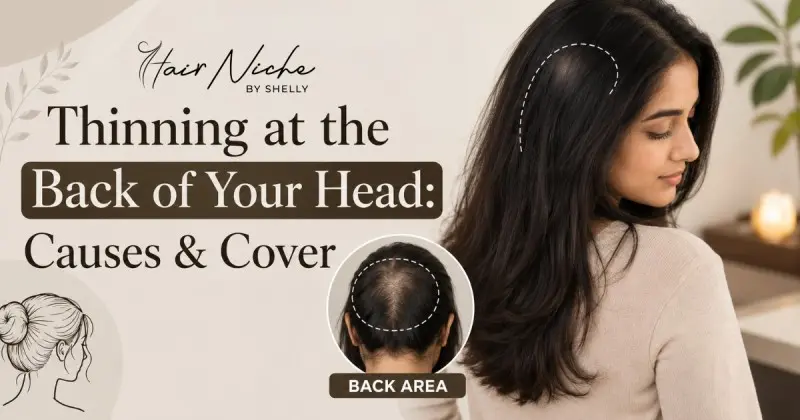
Thinning at the back of the head in women is usually caused by diffuse thinning, breakage from friction or tight styles, or hair that has simply lost density with age or hormonal change. Because you can't see it directly, it often goes unnoticed until a photo. A volumizer covers it quickly.
Most women don't find this one themselves. Somebody sends a photo taken from behind, or you catch the back of your head in a fitting-room mirror, and there it is — flatter than you expected, with more scalp showing than the front ever suggested.
It's unsettling precisely because you had no idea. Here's what tends to cause it, and what actually covers it.
Why the back is different from the top
Thinning on top gets all the attention because you see it every day in the mirror. The back is a blind spot, so it's usually further along by the time you notice.
It also has different causes. Pattern thinning tends to start at the parting and crown. The back is more often about friction and flatness than hereditary loss — which is good news, because those causes are more reversible.
Common causes of thinning at the back
Diffuse thinning. Hair thins evenly across the scalp rather than in one patch, so the back gets caught up in it. Hormonal changes, thyroid conditions, iron deficiency, stress and illness are all common drivers, and several are treatable once identified.
Friction and breakage. The back of your head rubs against pillows, chair backs, car headrests, bag straps and dupattas all day. Over years that wears hair down. Breakage looks like thinning but behaves differently — short broken strands rather than fewer strands.
Tight styles. Buns, tight ponytails and clipped-up styles concentrate tension at the back and nape. Constant tension there causes gradual loss along the tension line.
Loss of density with age. Individual strands get finer over time, so the same number of hairs covers less. The back shows this early because there's nothing framing it to disguise it.
Often it's more than one of these at once — finer strands from age, plus years of friction, plus a bun worn in the same spot. That combination is why the back can look noticeably worse than the front even when nothing dramatic has happened.
If it's spreading, patchy, or came on suddenly, get it checked — the NHS guide to hair loss sets out the causes worth seeing a doctor about.
How to tell what you're looking at
Get a phone photo of the back of your head in daylight, or ask someone. Then look for two things:
- Short, uneven strands sticking up across the area → breakage. It's damage, not loss, and it grows back.
- Even, fine coverage with scalp visible through it → diffuse thinning or low density hair.
The difference matters because breakage responds to gentler handling, while genuine thinning needs cover and, often, a medical answer to the cause.
Flat hair at back: what actually covers it
Here's the useful part — the back is one of the easiest areas to cover well, because you have hair above it to blend into and nobody sees it up close from six inches away.
A back hair volumizer is purpose-built for this. It clips in at the back to add density exactly where it's thin, sitting under your own hair so nothing shows. The 2 Set Back Hair Volumizer covers the back specifically rather than the crown.
A single volumizer set works if the flatness runs from the crown down rather than sitting purely at the back. The One Set Volumizer (4 Clips) adds body across a broader span.
Either way, the piece sits beneath your own hair, so what shows is simply a fuller shape — not an obvious addition. That's why the back is a forgiving place to start if you've never worn a hairpiece before.
Not sure which placement suits you? Our guide on back volumizer vs side patches covers where to add volume, and the full range is in hair volumizers.
Protecting what's there
Whatever the cause, four habits reduce further damage at the back:
- Loosen your styles, and don't tie in the same place daily.
- Switch to a smoother pillowcase to cut overnight friction.
- Let hair down when you can, particularly under bag straps.
- Clip volumizers into varied positions, not the same section each morning.
You found it — now you can deal with it
Thinning at the back is usually a mix of thinning and friction, and it's more coverable than most areas because you have hair above it to blend into. A back volumizer restores density in minutes while you work out the cause with a doctor.
Book a free consultation and we'll look at photos of the back with you and recommend the right placement and shade.
This article is for information only and isn't medical advice; speak to a doctor about diagnosis and treatment.
FAQs
1. What causes thinning at the back of the head in women?
The usual causes are diffuse thinning from hormonal, thyroid or iron issues, breakage from friction against pillows and chair backs, tension from tight styles, and strands getting finer with age.
2. Why didn't I notice thinning at the back sooner?
Because you can't see it directly. Most women find it in a photograph or a fitting-room mirror, which is why it's often further along than thinning at the parting.
3. Is thinning at the back the same as pattern hair loss?
Not usually. Female pattern thinning tends to start at the parting and crown, while the back is more often affected by friction, breakage or diffuse thinning.
4. How can I tell if it's breakage or hair loss?
Look closely in a photo. Short, uneven strands sticking up across the area suggest breakage, while even fine coverage with scalp showing through suggests genuine thinning.
5. What is a back hair volumizer?
It's a clip-in piece designed to add density at the back of the head specifically, sitting under your own hair so the wefts and clips stay hidden.
6. Will a volumizer cover visible scalp at the back?
It adds density around existing hair, which reduces how much scalp shows. If skin is clearly visible across the area, a topper covering that zone gives more reliable coverage.
7. Can pillowcases really cause thinning at the back?
Friction contributes to breakage over time, particularly on rougher fabrics. A smoother pillowcase won't fix thinning, but it reduces one source of ongoing damage.
8. Do tight buns cause thinning at the back?
Constant tension in the same place can cause gradual loss along the tension line. Loosening styles and varying where you tie your hair reduces that risk.
9. Should I see a doctor about thinning at the back?
Yes, if it's spreading, patchy, or appeared suddenly. Several causes such as thyroid problems and iron deficiency are treatable once identified with simple tests.
10. How quickly can I cover thinning at the back?
A clip-in volumizer takes a few minutes and works immediately, so you can have coverage the same day while you investigate the underlying cause.