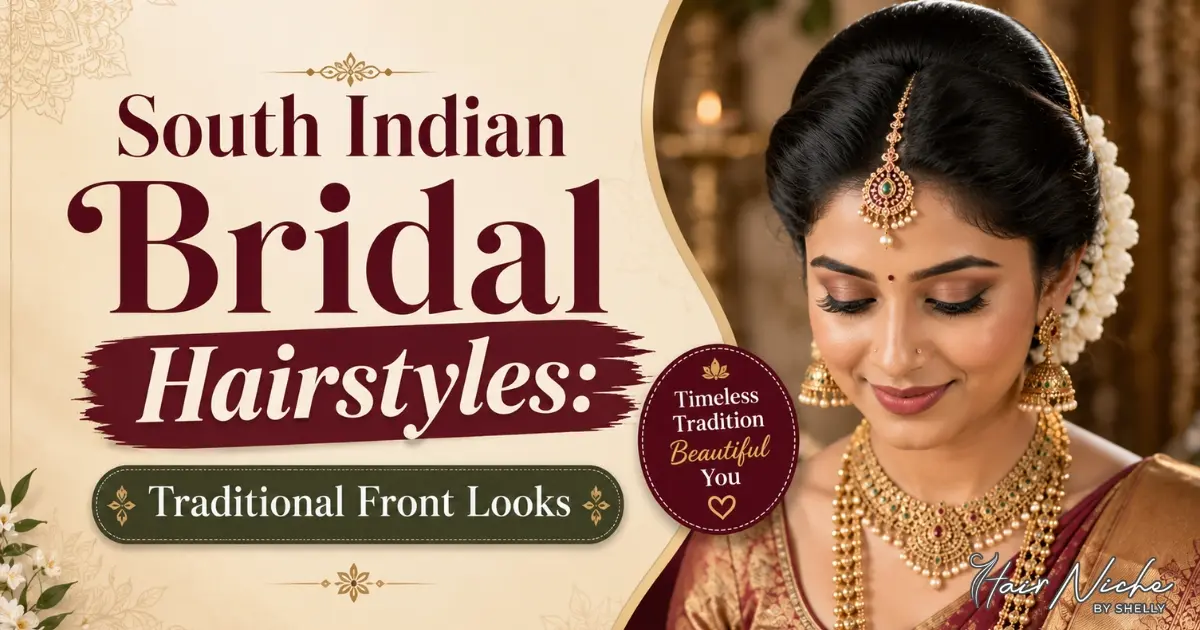
Your face is the most photographed thing on your wedding day, and the front of your hair is what frames it in every close-up, every garland moment, every ceremony. Yet most bridal advice jumps straight to the big decorated bun and forgets the front entirely. A beautiful south indian bridal hairstyle is decided at the parting and the crown — the maang tikka placement, the puff, the way the sides sweep back — long before the flowers go on.
This guide walks through nine traditional front looks, from the classic centre part to a full floral jadai, and shows you how to add the length and volume many of them quietly need — because a grand bridal look shouldn't depend on the hair you happened to be born with.
How to choose your bridal front
Three things guide the decision: your face shape, the weight of your jewellery, and your hair's natural length and thickness. A heavy nethichutti and maatal need a clean, structured front so nothing shifts. A softer, floral look suits a puff or gentle waves.
And here's the honest part most stylists won't say upfront: traditional South Indian bridal looks were built for very long, very thick hair. If yours is fine, short or thinning, the fix isn't giving up the look — it's adding real human-hair pieces so the braid and bun sit the way they should.
1. The centre-parted sleek front
The timeless base. A clean centre part with sleek, flat-set sides is the traditional canvas for a maang tikka or nethichutti, keeping all attention on the jewellery and the face. It suits almost every face shape and photographs crisply.
2. The soft front puff
A gentle puff at the crown adds height and grace, especially flattering if your face is round or you're wearing a tall temple-jewellery set. Fine hair can't hold a puff on its own — a small clip-in volumizer gives you a smooth, lasting lift without teasing your hair to breaking point.
3. Rope-twisted sides
Twisting the front sections back from the face and pinning them behind the crown is a refined, secure front that lasts through hours of ceremony. It keeps stray hair off the face in the heat and frames a centre-parted tikka beautifully.
4. The classic jadai (decorated braid)
The signature South Indian bridal look — a long, thick braid down the back, adorned with jadai billalu and flowers. A true jadai needs serious length and density. Clip-in extensions let a bride with shoulder-length or fine hair carry a full, heavy, floor-skimming braid with ease.
5. The traditional kondai bun
A large, low decorated bun (kondai) is the alternative to the jadai and holds flowers and pins effortlessly. For a fuller, rounder shape than your own hair allows, a clip-in Curly Bun builds the volume in seconds and sits securely all day.
For the flower-decorated version, step by step, see our bun for saree with gajra and fresh flowers guide.
6. Half-up crown with jasmine
A half-up front — crown pulled back, length left flowing — dressed with a line of jasmine is softer and increasingly popular for muhurtham and reception looks. It bridges traditional and modern without losing the cultural feel.
7. The front braided crown
Small braids swept from the temples and joined at the back create an intricate, regal front that holds jewellery and flowers along the braid line. It's detailed, secure and stunning in profile shots.
8. Voluminous waves for the reception
Many South Indian brides now switch to a softer, open, wavy front for the reception. Big, glamorous waves with a centre or deep side part feel bridal but relaxed — and a few clip-in wefts give thin hair the body to hold the curl through the night.
9. The full floral bun (poola jada style)
A bun completely wrapped in flowers — rows of jasmine, roses and kanakambaram — is the most opulent front-to-back statement of all. It needs a large, firm bun base to pin all those flowers into, which is exactly where a structured clip-in bun makes the look achievable rather than aspirational.
Not sure whether your hair needs a bun piece, extensions or just a volumizer to carry your chosen look? Book a free video consultation and our stylists will tell you exactly what your look requires — well before the wedding-morning rush.
Your bridal look shouldn't wait on your hair
Every traditional South Indian bridal front — the sleek centre part, the puff, the jadai, the floral kondai — was designed for length and density that not every bride has on the day. Real human-hair pieces simply give you that base, so the braid falls heavy, the bun sits full, and the flowers stay put through every ritual.
Start by matching your look to your hair: browse our clip-in buns and scrunchies for a fuller kondai, or take our 2-minute Hair Solution Quiz and we'll point you to the pieces your chosen front actually needs. Planning a Punjabi-influenced look too? Our front hairstyles with paranda for brides guide covers that beautifully.
FAQs
1. What is the most traditional South Indian bridal hairstyle?
The long, decorated jadai (braid) worn down the back, paired with a centre-parted front and a maang tikka or nethichutti, is the most traditional look. A large floral kondai bun is the classic alternative.
2. Which front hairstyle suits a South Indian bride best?
A clean centre part suits most brides and shows off temple jewellery, while a soft front puff flatters round faces and adds height. Choose based on your face shape and how heavy your headpiece is.
3. Can I have a jadai if my hair is short or thin?
Yes. Clip-in or braid extensions add the length and thickness a full jadai needs, so short or fine hair can still carry a long, heavy bridal braid.
4. How do I get a big bridal bun with thin hair?
Use a clip-in bun made from real human hair. It builds a full, round kondai that holds flowers and pins securely, without padding that slips.
5. Do hair extensions hold flowers and bridal jewellery?
Real human-hair pieces hold gajra, pins and jadai billalu just like natural hair, and often more securely because the base is fuller and firmer.
6. What hairstyle works for both the muhurtham and the reception?
Wear a traditional jadai or kondai for the ceremony, then switch to open glamorous waves or a soft half-up for the reception. Clip-in pieces make the change quick.
7. How do I keep my bridal hairstyle in place all day?
Start with a secure, structured base, use plenty of U-pins, and choose firm clip-in pieces over loose padding. A trial before the wedding confirms it will hold.
8. Is a front puff suitable for a round face?
Yes — a puff adds height that visually lengthens a round face, which is why it's a flattering, popular bridal front.
9. When should I do a bridal hairstyle trial?
Do a trial two to four weeks before the wedding, wearing any extensions or bun pieces you plan to use, so there are no surprises on the day.
10. Can I match extensions to my natural hair colour for the wedding?
Yes. Real human-hair pieces come in natural black and brown shades and can be colour-matched to blend invisibly with your own hair.