
If your hairline has quietly crept backward, or you’ve noticed thinning at your temples where a tight ponytail always sat, it’s worth knowing about traction alopecia — hair loss caused not by genetics or illness, but by prolonged tension on the hair. The good news, and the reason to act now, is that when caught early it’s often preventable and reversible. This guide explains how it happens, how to stop it, and the gentle, discreet ways to cover a thinning hairline while it recovers.
It’s an honest topic for a hair brand to cover, because some of the culprits are styles and pieces we all love — but wearing them kindly is the whole point.
What traction alopecia is
Traction alopecia is a form of hair loss caused by repeated or prolonged pulling on the hair. Over time, constant tension stresses the follicles, most often along the hairline and temples, leading to thinning and, if it continues for a long time, potentially permanent loss. It’s most associated with consistently tight hairstyles and heavy or badly-fitted hair pieces. For a reliable medical overview, DermNet’s page on traction alopecia is a trustworthy reference.
The encouraging part: because the cause is mechanical, removing the tension early usually allows the hair to recover. That makes prevention genuinely powerful here — unlike some kinds of hair loss, this is one where changing a few daily habits can make a real, visible difference to whether the hair comes back.
What causes it (the honest list)
- Tight ponytails, buns and braids worn high and tight, day after day
- Very tight cornrows, weaves or extensions that pull constantly at the roots
- Heavy hair pieces or badly-fitted, over-tight attachments
- Constant tension in the same spot without ever giving the hair a rest
Notice the common thread: it’s not the style itself so much as tightness plus repetition in the same place. Occasional and gently-worn styles are a different matter.
How to prevent it
- Loosen up. Wear ponytails, buns and braids looser, and lower on the head, so they don’t drag at the hairline.
- Rotate your styles. Don’t part or pull in the exact same place every day — vary it so no single area takes constant tension.
- Give your hair rest days. Let your hair down and tension-free regularly.
- Wear pieces kindly. With clip-in pieces, rotate the clip positions rather than anchoring the same spot daily, and never wear them so tight they tug — the same principle we cover in can you wear a topper every day and how to clip a topper securely.
- Ease off if it hurts. Pulling, tenderness, or little bumps at the hairline are early warnings — loosen everything and see a professional.
Worn this way, clip-ins and toppers reduce the temptation to scrape your own hair tightly, rather than adding to the problem.
Spotting it early
Early signs include a receding or thinning hairline, thinning at the temples, tiny bumps or tenderness where hair is pulled, and sometimes a “fringe sign” — a thin line of hair left right at the edge. Because early traction alopecia is often reversible but late-stage can scar, seeing a doctor or dermatologist at the first signs genuinely matters.
How to cover it while it recovers
A thinning hairline or temples can be covered discreetly and gently:
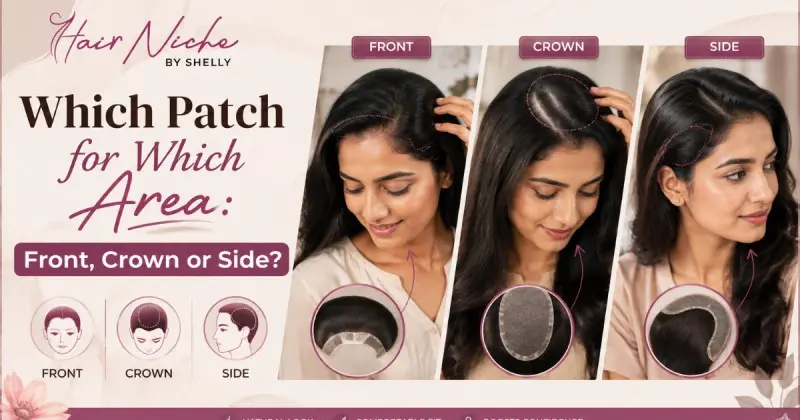
- A front hairline patch sits over a thinning hairline or temple area and blends in — a targeted, light option. Explore our cover-up patches for this.
- A topper covers broader thinning further back on the crown or top.
- Gentle styling — soft, loose face-framing pieces drawn forward can disguise a receding hairline without any added tension.
Crucially, choose the lightest, gentlest coverage that works, and attach it away from the fragile area so you’re not adding tension where hair is already stressed. Our decision guide helps you pick the least-fuss option.
Love your styles — just wear them kindly
Traction alopecia is one of the few kinds of hair loss you can largely prevent, simply by easing the tension and varying where it falls. Catch it early, loosen up, give your hair rest, and cover a thinning hairline gently while it recovers.
If you’d like help choosing a light, gentle cover for a thinning hairline — and making sure it’s worn without adding tension — our stylists will guide you on a free video consultation. Or browse our thin-hair solutions for discreet options. Your favourite hairstyles aren’t the enemy; the tension is, and that’s the easy part to fix.
This article is general information, not medical advice. It doesn’t diagnose or treat traction alopecia. If you notice a receding hairline, tenderness or bumps, please see a doctor or dermatologist, as early treatment gives the best chance of recovery.
FAQs
1. What causes traction alopecia?
It’s caused by prolonged or repeated tension on the hair — most often from consistently tight ponytails, buns, braids, weaves or heavy pieces that pull at the roots, especially along the hairline.
2. Is traction alopecia reversible?
Often yes, if caught early. Because the cause is mechanical, removing the tension usually lets hair recover. Long-standing traction alopecia can scar and become permanent, so early action matters.
3. What are the early signs of traction alopecia?
A receding or thinning hairline, thinning at the temples, small bumps or tenderness where hair is pulled, and sometimes a thin “fringe” of hair left at the very edge of the hairline.
4. Can hair extensions cause traction alopecia?
Heavy, very tight or constantly-worn extensions can, if they pull at the roots. Worn gently — not too tight, with rotated positions and rest days — clip-in pieces avoid that constant tension.
5. How do I prevent traction alopecia?
Wear styles looser and lower, vary where you part and pull, give your hair regular tension-free rest days, and ease off immediately if you feel pulling or tenderness.
6. How can I cover a thinning hairline from traction alopecia?
A front hairline patch covers a thinning hairline or temples discreetly, and soft face-framing pieces can disguise it. Choose light coverage attached away from the fragile area.
7. Does traction alopecia grow back?
If the follicles aren’t permanently damaged, hair often regrows once the tension is removed. If the area has scarred from long-term tension, regrowth may not happen, which is why early treatment helps.
8. Should I stop wearing ponytails completely?
Not necessarily — you can keep your styles by wearing them looser and lower, and varying them. It’s constant tightness in the same spot that causes the problem.
9. When should I see a doctor about traction alopecia?
At the first signs — a receding hairline, tenderness or bumps. Early assessment by a doctor or dermatologist gives the best chance of full recovery.