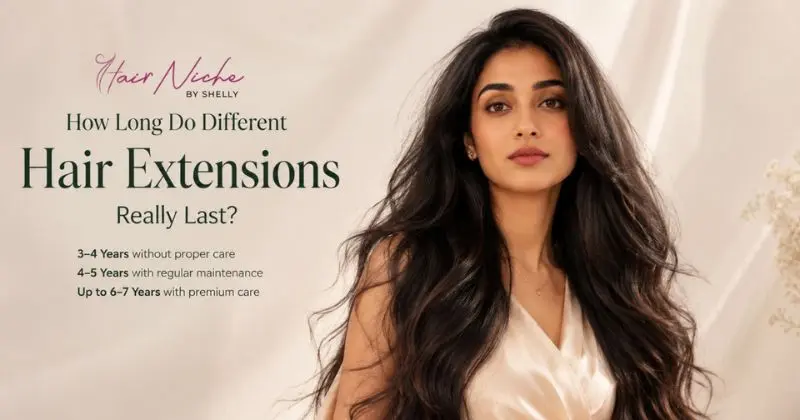
One of the most common questions people ask before investing in extensions is: “How long do different hair extensions really last?”
The answer isn’t simple because it depends on the type of extension, the quality of hair used, and how well you care for them. Some extensions last only a few weeks per installation, while others can stay in rotation for over a year.
In this guide, we’ll break down the real lifespan of each type of hair extension, what affects durability, and how to make them last as long as possible.
What Affects Hair Extension Lifespan?
Before comparing types, it’s important to understand the main factors that determine how long extensions last.
1. Extension Method
Different installation methods place different levels of stress on hair and bonds.
2. Hair Quality
- 100% human hair (Remy) lasts the longest
- Synthetic hair breaks down faster and tangles easily
3. Maintenance Routine
- Washing frequency
- Heat styling habits
- Brushing technique
4. Lifestyle
- Swimming
- Exercise
- Product use
5. Installation Quality
Poor placement can shorten lifespan significantly.
Clip-In Hair Extensions: How Long Do They Last?
Clip-ins are the most flexible and reusable type of extensions.
Average Lifespan:
- 6 months to 1 year with regular use
- Up to 2 years with occasional use and good care
Why They Last Longer:
- Not worn daily
- Removed before sleep
- No adhesive or bonding damage
What Shortens Their Life:
- Frequent heat styling
- Rough brushing
- Over-washing
Reality Check:
Clip-ins don’t “wear out” from installation as they wear out from handling and styling.
Tape-In Hair Extensions: How Long Do They Last?
Tape-ins are semi-permanent extensions that stay in your hair continuously.
Per Installation:
- 6 to 8 weeks before maintenance is needed
Total Hair Lifespan:
- 6 to 12 months with reuse and retaping
Why They Need Regular Maintenance:
- Hair growth pushes bonds down
- Oil and product buildup weakens adhesive
- Daily wear causes gradual slipping
Key Insight:
The hair itself lasts much longer than the tape only the adhesive needs replacing.
Keratin Bond (Fusion) Extensions: Lifespan Explained
Keratin extensions are bonded using heat-fused keratin protein.
Average Lifespan:
- 3 to 5 months per application
Why They Last Well:
- Strong keratin bonds
- Individual strand application
- Resistant to daily styling
Limitations:
- Not reusable after removal
- Requires professional installation and removal
Best For:
- Long-term transformations
- Low-maintenance wearers
Sew-In / Weave Extensions: How Long Do They Last?
Sew-in extensions are braided into natural hair and stitched in.
Per Installation:
- 6 to 10 weeks before reinstall needed
Total Lifespan:
- 6 to 12 months (hair can be reused)
Why They Last:
- Secure braiding base
- Strong attachment method
Maintenance Needs:
- Scalp care is essential
- Tightness must be monitored
Micro-Link / I-Tip Extensions
These are attached using small beads or rings.
Average Lifespan:
- 3 to 4 months per install
Advantages:
- No heat or glue
- Reusable hair
- Natural movement
Drawbacks:
- Beads may slip over time
- Requires maintenance appointments
Halo Extensions: The Gentle Option
Halo extensions sit on a wire rather than attaching to your hair.
Average Lifespan:
- 6 months to 1 year+ with proper care
Why They Last Long:
- No daily tension
- No adhesives or clips
- Minimal wear-and-tear
Ideal For:
- Beginners
- Thin or fragile hair
Hair Toppers and Volume Pieces
Hair toppers are designed to cover thinning areas, especially at the crown.
Average Lifespan:
- 6 to 12 months or longer
Why They Last Well:
- Used selectively, not daily full-head wear
- Lightweight construction
- Less exposure to stress
Ponytail & Specialty Extensions
Pre-styled pieces like ponytails or buns are popular for quick glam.
Average Lifespan:
- 6 months to 1+ year depending on usage
Why They Last:
- Used occasionally
- Minimal styling manipulation
Comparison: Real Lifespan of Hair Extensions
Signs Your Extensions Are Reaching the End
Even high-quality extensions don’t last forever. Watch for:
- Excessive tangling
- Dry, straw-like texture
- Shedding from wefts
- Frizz that won’t smooth
- Loss of shine
Once these appear, it’s usually time for replacement or deep conditioning.
How to Make Extensions Last Longer
Do This:
- Use sulfate-free shampoo
- Brush gently from ends upward
- Store properly when not in use
- Apply heat protectant
Avoid This:
- Sleeping with clip-ins
- Overwashing
- Heavy oils near bonds
- Excessive heat styling
Premium human hair extensions, like those from Hair Niche by Shelly, are designed to last longer when properly cared for due to their natural cuticle alignment and durability.
Final Thoughts
So, how long do hair extensions really last?
The truth is: it depends entirely on the type you choose and how you treat them. Clip-ins can last years, tape-ins offer months of repeated use, and keratin bonds give a few months of semi-permanent wear. Meanwhile, halo and toppers offer some of the longest-lasting, low-stress options.
If you understand your lifestyle, maintenance habits, and hair needs, you can choose extensions that not only look beautiful—but also last as long as you need them to.
FAQs
Q1. Which hair extensions last the longest?
Ans. Clip-ins and halo extensions last the longest—often over a year with proper care.
Q2. What extensions last the shortest time?
Ans. Keratin bonds last only 3–5 months per installation.
Q3. Can hair extensions be reused?
Ans. Yes, clip-ins, tape-ins, and sew-ins can often be reused.
Q4. Do expensive extensions last longer?
Ans. Yes, high-quality human hair lasts significantly longer than synthetic.
Q5. How long do tape-in extensions really last?
Ans. 6–8 weeks per install, up to 12 months with reuse.
Q6. Do extensions damage natural hair?
Ans. Not if installed and maintained correctly.
Q7. How do I know when to replace extensions?
Ans. When they become dry, tangled, or lose softness.
Q8. Can I sleep with extensions?
Ans. Only semi-permanent ones like tape-ins or keratin bonds.
Q9. What makes extensions last longer?
Ans. Good care, low heat use, and quality human hair.
Q10. Are clip-in extensions worth it?
Ans. Yes! They are the most flexible and longest-lasting option overall.