Buying a hair topper online can feel like a gamble — and the fear is usually the same one: what if it doesn’t fit, doesn’t cover the right area, or sits like a patch that everyone can spot? That worry is completely fair, and it’s almost always about one thing: size. Getting the size right is what separates a topper that disappears into your own hair from one that never quite feels like yours. This hair topper size guide walks you through measuring properly, so you order once and it blends the first time.
It takes about ten minutes, a mirror and a soft measuring tape. Work through the checklist below and you’ll know exactly which base size, length and coverage you need before you spend a rupee.
Why size matters more than you’d think
A topper’s job is to cover your area of thinning and blend seamlessly at the edges. Too small, and the thinning shows around it. Too large, and it sits over hair that doesn’t need covering, adding bulk and a visible edge. The base size — the mesh or silk foundation the hair is tied into — is the single most important measurement, because it decides how much of your scalp the topper conceals.
Colour and texture matter too, but they can be matched. A base that’s the wrong size for your thinning simply won’t sit right, however perfect the shade.
What you’ll need
• A soft measuring tape (the kind used for sewing)
• Two clips to part and hold your hair
• A handheld mirror plus your bathroom mirror, or a phone camera
• Someone to help, if you can — the crown is hard to see yourself
Your measuring checklist
1. Map your thinning area. Part your hair where you naturally do, then look at where the scalp shows most — usually the crown, the top, or along the part. This is the zone your topper needs to cover.
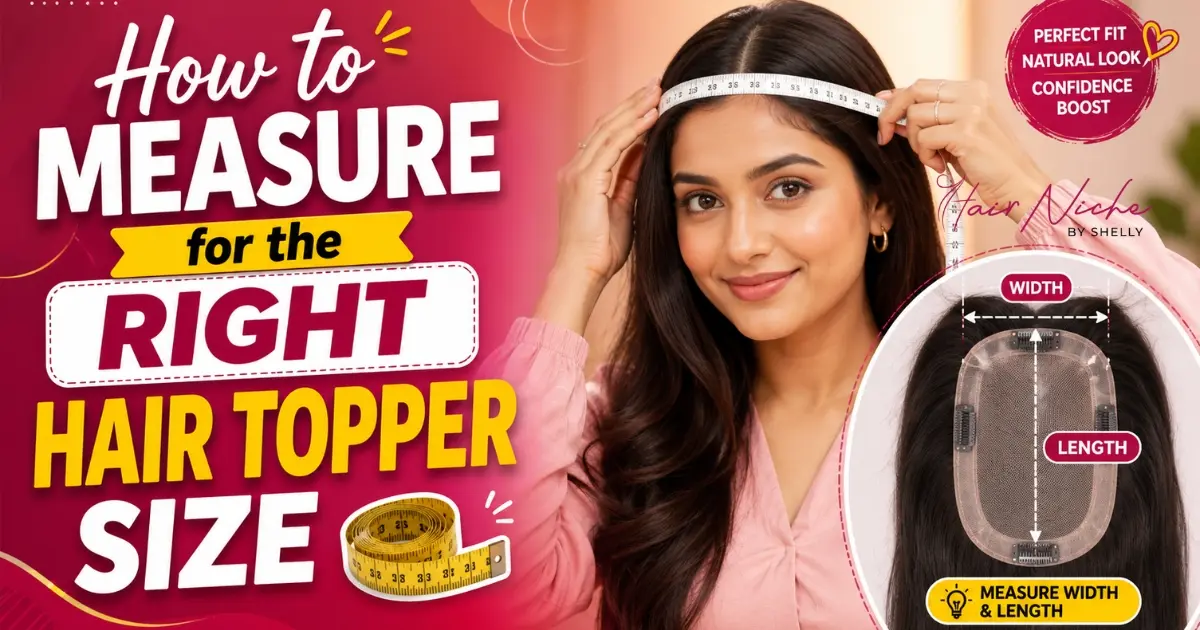
2. Measure the length of the area. Lay the tape from front to back across the thinning zone and note the measurement in inches. Measure the visible thinning, not your whole head.
3. Measure the width. Now measure side to side across the widest part of the same zone. You now have your coverage area as length × width.
4. Match it to a standard base size. Toppers come in set base sizes. As a rough guide: a small base around 4”×4” to 5”×5” suits early or localised crown thinning; a medium base around 6”×6.5” covers a moderate top-and-crown area; a larger base of 7”×8” or more is for more extensive top-of-head coverage. Always size up slightly if you’re between sizes, so the edges sit on hair, not scalp.
5. Decide your hair length. Measure from your crown to where you want the topper’s hair to end, so it blends into your own lengths rather than stopping short. Note this in inches too.
6. Check the density you need. Look at how much coverage you want: light and natural to blend with existing hair, or fuller if the area is very sparse. More density gives more coverage but needs careful blending.
7. Note your part and crown direction. See which way your hair falls at the crown and where your part sits. Choosing a topper with a matching part or a natural-looking crown (rather than a fixed centre part) makes it look like your own hair.
8. Match colour and texture last. Once size and length are set, match the shade and wave pattern to your own hair. Our guide to matching hair-extension colour walks through this step by step.
Turning your measurements into the right topper
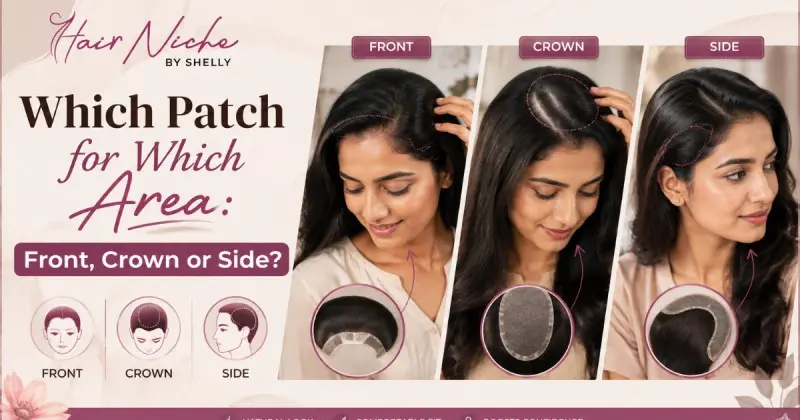
Your coverage area points you to a base size, and your goal points you to a base type. If you want the most undetectable part and crown, a silk or fine-mesh base sits closest to the scalp — our Invisible Hair Topper and Seamless Crown Topper are built for exactly that. If you want volume and texture as well as coverage, a curly-base topper like our Curly Volume Topper adds body while it conceals.
Still unsure whether your area is a crown-only concern or needs fuller coverage? Our crown thinning vs full-top coverage guide breaks that decision down.
Measure once, blend every day
The difference between a topper you love and one that stays in the drawer is almost always the measuring you do before you buy. Spend the ten minutes, note your coverage area, length and part, and you’ll choose a topper that fits your head and disappears into your hair.
If you’d rather not guess, our stylists will measure and colour-match you on a free video consultation — you hold up the tape, we tell you the exact size and shade to order. Or browse the full hair toppers range once you have your numbers. Either way, you’ll order with confidence instead of crossed fingers.
FAQs
1. How do I know what size hair topper I need?
Measure the length and width of your thinning area in inches, then match it to a base size, sizing up slightly if you’re in between so the edges sit on hair rather than scalp.
2. What is the most common hair topper base size?
Bases around 5”×5” to 6”×6.5” are the most common, covering the crown and top for the majority of women with mild to moderate thinning.
3. Should I size up or down if I’m between topper sizes?
Size up. A slightly larger base lets the edges blend into surrounding hair, whereas a too-small base leaves thinning visible around it.
4. How do I measure my crown for a topper by myself?
Use two mirrors or your phone camera, part your hair, and lay a soft tape across the visible thinning front-to-back and side-to-side. Asking someone to help makes it easier and more accurate.
5. What length topper should I choose?
Measure from your crown to where you want the hair to end, matching your own length so the topper blends into your lengths rather than stopping short.
6. Does base size affect how natural a topper looks?
Yes. The right base size covers only the thinning area, so the edges rest on hair and stay invisible. It’s the biggest factor in a natural result, alongside colour matching.
7. What is the difference between a silk base and a mesh base topper?
A silk or fine base mimics the scalp for the most undetectable part and crown, while a standard mesh base is lighter and breathable. Both work well; silk looks most natural at the parting.
8. How much density should a topper have?
Enough to cover your thinning without looking thicker than your own hair. Very sparse areas need more density, but matching your natural fullness keeps it believable.
9. Can I get a topper if my thinning is only at the part?
Yes. A smaller base topper or a part-focused piece adds coverage and volume right where the part shows, without covering hair that doesn’t need it.
10. Can I be measured without visiting a salon?
Yes. A free video consultation lets our stylists guide your measurements and colour match remotely, so you can order the correct size from home.
This article is a sizing guide for cosmetic hair toppers. If you’re noticing sudden, patchy or rapidly worsening hair loss, it’s worth speaking to a doctor or dermatologist as well, since it can have treatable underlying causes.