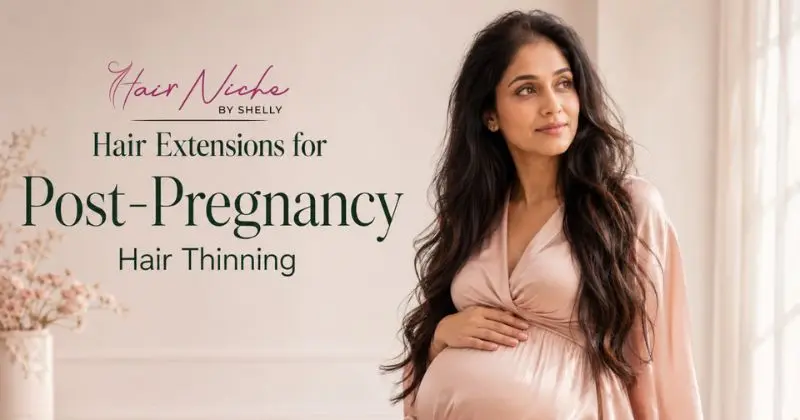
Post-pregnancy hair thinning is something many women experience but few are prepared for. After months of thick, full hair during pregnancy, the sudden shedding can feel alarming. If you’re noticing more hair fall, reduced volume, or visible thinning, you’re not alone.
The good news is that there are safe and effective ways to manage it. One increasingly popular solution is hair extensions for post-pregnancy hair thinning, which can instantly restore volume and boost confidence while your natural hair recovers.
In this guide, we’ll explore why postpartum hair thinning happens, whether extensions are safe, and how to choose the best options for your hair.
Why Does Hair Thin After Pregnancy?
Understanding the cause helps you make better decisions for your hair care.
The Science Behind It:
During pregnancy, elevated estrogen levels keep hair in the growth phase longer, resulting in thicker hair. After childbirth, hormone levels drop, causing many hairs to enter the shedding phase at once.
This condition is known as postpartum hair loss, and it usually occurs between 2–6 months after delivery.
Common Signs:
- Increased hair shedding
- Thinning at the crown or temples
- Loss of volume
- Weaker hair strands
The good news? This is temporary, and hair typically regrows within 6–12 months.
Can Hair Extensions Help Postpartum Hair Thinning?
Yes—when used correctly, hair extensions can be a safe and effective way to manage thinning hair during this phase.
How Extensions Help:
- Add instant volume and thickness
- Cover thinning areas
- Improve overall hair appearance
- Boost confidence during recovery
However, it’s important to choose lightweight and non-damaging extensions to avoid putting extra stress on fragile hair.
Best Types of Hair Extensions for Postpartum Hair Thinning
Not all extensions are suitable during this sensitive period. Here are the safest options:
Clip-In Extensions (Best for Temporary Use)
Why They’re Ideal:
- No glue, heat, or chemicals
- Easy to apply and remove
- Minimal stress on hair
Clip-ins are perfect for occasional use—whether for outings, events, or daily styling.
Halo Extensions (Gentlest Option)
Key Benefits:
- No attachment to natural hair
- Sits on a thin, invisible wire
- Zero tension on roots
Halo extensions are one of the safest choices for women experiencing active hair fall.
Lightweight Tape-In Extensions (With Caution)
When to Use:
- Only after hair fall reduces
- Applied by professionals
These provide longer-lasting volume but must be lightweight and carefully installed.
Hair Toppers (Best for Crown Thinning)
Why They Work:
- Specifically designed to cover thinning areas
- Blend with natural hair
- Add volume at the top
Premium options from Hair Niche by Shelly include high-quality hair toppers made from 100% natural human hair, ensuring a seamless and natural look.
Comparison Table: Best Extensions for Postpartum Hair
How to Use Extensions Safely After Pregnancy
Safety should always come first when dealing with hair thinning.
Step-by-Step Guide:
- Assess Your Hair Condition
- Avoid extensions if hair fall is severe or scalp is sensitive
- Choose Lightweight Options
- Heavy extensions can worsen shedding
- Avoid Tight Placement
- Keep clips loose and comfortable
- Limit Wear Time
- Remove extensions at the end of the day
- Blend Gently
- Use minimal heat styling
Styling Tips for Postpartum Hair
The right styling techniques can enhance the look of extensions while protecting your hair.
Best Hairstyles:
- Loose waves – Add volume and hide thinning
- Low ponytails – Gentle and stylish
- Half-up styles – Cover crown thinning
- Soft braids – Reduce tension
Styling Do’s:
- Use heat protectant
- Keep styles loose
- Use lightweight products
Styling Don’ts:
- Avoid tight buns or ponytails
- Don’t overuse heat tools
- Avoid heavy sprays
Hair Care Tips for Faster Recovery
While extensions improve appearance, proper care helps natural hair recover.
Essential Tips:
- Use gentle, sulfate-free shampoos
- Eat a balanced, nutrient-rich diet
- Avoid excessive heat styling
- Massage your scalp regularly
- Stay hydrated
Hair care products from Hair Niche by Shelly are designed to support both natural hair and extensions, helping maintain softness and strength.
Common Mistakes to Avoid
Many women unknowingly damage their hair during this phase.
Avoid These:
- Wearing heavy extensions daily
- Ignoring scalp sensitivity
- Using poor-quality synthetic hair
- Skipping proper hair care
- Keeping extensions on overnight
Before & After: What to Expect
Before:
- Noticeable thinnings
- Reduced volume
- Limited styling options
After Using Extensions:
- Fuller, thicker appearance
- Improved confidence
- More versatile hairstyles
The transformation is immediate, even while natural hair is still recovering.
When Should You Avoid Extensions?
In some cases, it’s better to wait.
Avoid Extensions If:
- Hair fall is excessive
- Scalp is irritated or sensitive
- You’re experiencing medical hair loss conditions
Consulting a professional can help you make the right decision.
Expert Tips for Best Results
Pro Advice:
- Start with halo or clip-in extensions
- Gradually move to semi-permanent options
- Always prioritize scalp health
- Invest in high-quality human hair
Emotional Impact & Confidence Boost
Hair thinning after pregnancy can affect self-esteem. Extensions offer more than just aesthetic benefits as they help you feel like yourself again.
Looking good often translates to feeling better, especially during the postpartum phase when self-care is essential.
Conclusion
Dealing with postpartum hair thinning can be challenging, but it’s important to remember that it’s temporary. In the meantime, hair extensions for post-pregnancy hair thinning provide a safe and effective way to restore volume and confidence.
The key is choosing lightweight, gentle options like clip-ins, halo extensions, or hair toppers, and using them with care. High-quality solutions from Hair Niche by Shelly ensure natural blending, comfort, and long-lasting results.
With the right approach, you can enjoy beautiful, fuller-looking hair while your natural strands regain their strength.
FAQs
Q1. Is postpartum hair thinning normal?
Ans. Yes, it’s a common condition caused by hormonal changes after pregnancy.
Q2. When does postpartum hair loss stop?
Ans. It usually improves within 6–12 months.
Q3. Are hair extensions safe after pregnancy?
Ans. Yes, if you choose lightweight and non-damaging options.
Q4. Which extensions are best for postpartum hair loss?
Ans. Clip-ins, halo extensions, and hair toppers are the safest.
Q5. Can extensions worsen hair fall?
Ans. Yes, if they are heavy or applied incorrectly.
Q6. Can I wear extensions daily?
Ans. It’s best to limit use and remove them at night.
Q7. Do hair toppers help with thinning?
Ans. Yes, they are ideal for covering crown thinning.
Q8. Should I avoid tape-in extensions?
Ans. Use them only after hair fall reduces and with professional help.
Q9. How do I care for my hair during this phase?
Ans. Use gentle products, avoid heat, and maintain a healthy diet.
Q10. Will my hair grow back naturally?
Ans. Yes, postpartum hair loss is temporary and usually resolves over time.