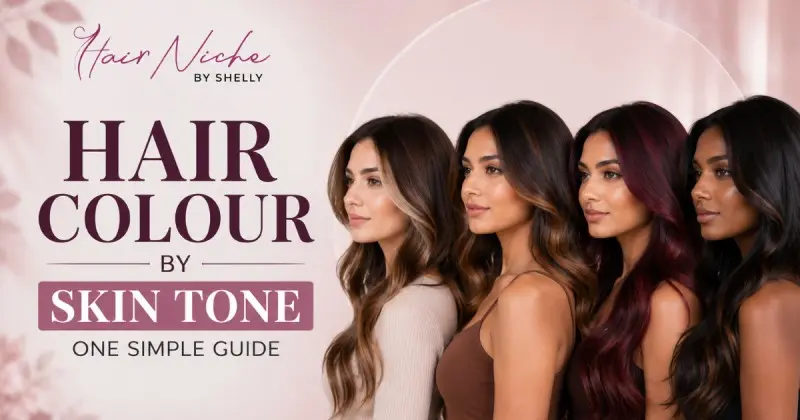
We’ve all seen a shade look incredible on someone else, tried it, and somehow ended up looking washed out or sallow. The colour wasn’t wrong — it just wasn’t right for us. The secret behind every flattering dye job is choosing your hair colour for skin tone, and specifically for your undertone, not just whether your skin is fair or deep. Get that one thing right and almost any shade family can be made to glow on you.
This simple guide shows you how to read your undertone in two minutes, the colours that flatter warm, cool and neutral skin, and the easy way to test a shade before you commit to anything permanent.
First, find your undertone (not your skin depth)
Skin depth is how light or deep your complexion is. Undertone is the colour underneath — warm, cool or neutral — and it’s what decides which hair colours flatter you. Three quick checks:
- Veins: Look at the inside of your wrist. Bluish or purple veins suggest a cool undertone; greenish veins suggest warm; a mix suggests neutral.
- Jewellery: Think about whether gold or silver looks better on you. Gold flatters warm undertones; silver flatters cool; both work for neutral.
- White fabric: Hold a pure white cloth to your face. If your skin looks pink or rosy against it, you’re cool; if it looks yellow or golden, you’re warm.
Once you know your undertone, the rest is easy.
Best hair colours for warm undertones
Warm undertones (golden, peachy or yellow) glow next to warm, golden-based shades. Think honey and caramel browns, golden and chocolate brunettes, warm coppers and auburns, and rich golden blacks. Many Indian and olive skin tones sit in the warm-to-neutral range and carry deep caramel, warm mahogany and golden-brown beautifully.
What to be careful with: very ashy, silvery or blue-based shades can make warm skin look tired. If you love a cool colour, keep some warmth in the base so it doesn’t drain your complexion. A common fix is to add a warm face-framing streak or two, which reintroduces warmth right where it flatters the skin most.
Best hair colours for cool undertones
Cool undertones (pink, red or blue) are flattered by cool, ash-based shades. Think ash and mushroom browns, cool espresso and blue-black, ashy or platinum blondes, and jewel tones like burgundy, plum and cool red. These shades echo the pink in the skin and look crisp rather than muddy.
What to be careful with: overly golden, orange or brassy tones can clash with cool skin and emphasise redness. A cool or neutral base keeps things balanced.
Best hair colours for neutral undertones
If you’re neutral (a balanced mix, or you genuinely can’t tell), you’re lucky — most shades suit you. You can lean warm or cool depending on the season or your mood. Neutral browns, soft caramels, and balanced brunettes are especially foolproof, and you can carry both a golden caramel and an ashy brown well.
Depth matters too
Alongside undertone, contrast plays a part. Very deep skin looks striking with rich, saturated shades — deep warm browns, jet and soft black, warm mahogany, and bold jewel-toned streaks. Fairer skin often suits softer contrast so the colour doesn’t overwhelm. Medium and dusky skin sits comfortably in between and can carry both soft caramels and deeper, richer shades depending on how much drama you want. The safest rule: match the undertone first, then adjust how light or deep you go to suit your complexion, and keep the boldest colour for the pieces that frame your face where it flatters most.
The easy way to test before you commit
Here’s the part most guides skip: you don’t have to dye your hair to find out what suits you. Clip-in colour streaks let you place a caramel, burgundy or ashy shade against your face and see it in natural light — no bleach, no regret. Try a warm and a cool option, take a photo in daylight, and your undertone answer becomes obvious.
Streaks also let you add flattering colour permanently-free: a face-framing money-piece in your best shade lifts your complexion under any lighting, which is exactly why it photographs so well for events and receptions. And if you’re colour-matching a full set of extensions, our guide to matching hair-extension colour walks through blending shades to your own hair.
Match the undertone, and the colour glows
The whole secret is undertone: warm skin loves golden and caramel shades, cool skin loves ashy and jewel tones, and neutral skin can wear almost anything. Read yours with the wrist, jewellery and white-fabric checks, then choose your shade family from there.
Before you commit to a salon colour, test it: clip in a couple of colour streaks in different shades and see which lights up your face — or take our 2-minute Hair Solution Quiz and we’ll suggest shades for your undertone. It’s the risk-free way to find the colour that was always meant for you.
FAQs
1. How do I know what hair colour suits my skin tone?
Find your undertone first using the wrist-vein, jewellery and white-fabric checks. Warm undertones suit golden and caramel shades, cool undertones suit ashy and jewel tones, and neutral undertones suit most colours.
2. What hair colour suits warm skin tones?
Golden and caramel browns, warm coppers and auburns, chocolate brunettes and golden blacks flatter warm undertones. Very ashy or silvery shades can look draining.
3. What hair colour suits cool skin tones?
Ash browns, cool espresso, blue-black, ashy blondes and jewel tones like burgundy and plum flatter cool undertones. Brassy, orange shades can clash.
4. What hair colour suits Indian or olive skin?
Many Indian and olive skin tones are warm to neutral and suit deep caramel, warm mahogany, golden brown and rich soft blacks. Bold jewel-toned streaks also look striking on deeper skin.
5. How do I find my skin undertone?
Check your wrist veins (blue for cool, green for warm), whether gold or silver jewellery suits you better, and how your skin looks against white fabric.
6. Can I test a hair colour before dyeing?
Yes. Clip-in colour streaks let you place a shade against your face and see it in natural light, so you can judge what suits you without any bleach or commitment.
7. What if I have a neutral undertone?
You can wear most shades. Neutral browns and caramels are especially foolproof, and you can lean warm or cool depending on your preference.
8. Does skin depth matter as well as undertone?
Yes. Deeper skin suits rich, saturated shades, while fairer skin often suits softer contrast. Match undertone first, then adjust how light or deep you go.
9. Which hair colour makes you look washed out?
A shade that fights your undertone — ashy colours on warm skin, or brassy golden colours on cool skin — tends to make you look tired or washed out.
10. Can clip-in streaks add colour without dyeing?
Yes. Clip-in streaks add flattering, removable colour, including a face-framing money-piece, so you can wear colour that suits your skin tone without any permanent change.