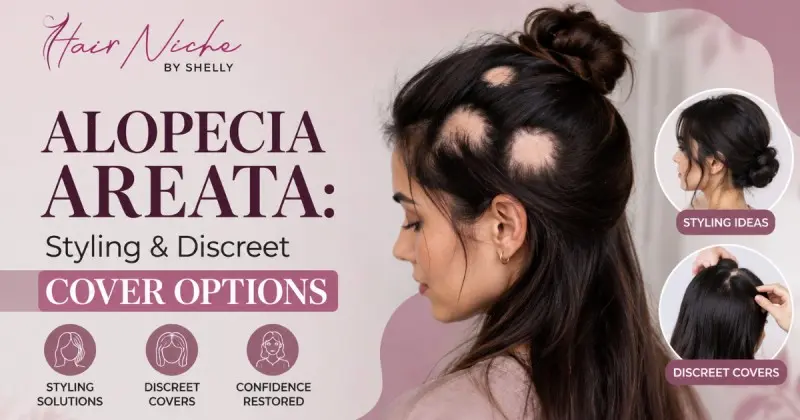
Alopecia areata causes sudden, patchy hair loss and should be looked at by a dermatologist — but while you seek treatment, you can cover it discreetly. A cover-up patch suits one small patch, a topper covers patches over the crown, and a wig suits widespread loss. Covering it and treating it work alongside each other, not instead of each other.
Few things unsettle you quite like finding a smooth, coin-sized bald patch where there was hair yesterday. Alopecia areata can appear suddenly and unpredictably, and the emotional weight of that — the daily checking, the dread of it spreading — is completely real and completely valid. This guide won't pretend to be a cure, and it isn't medical advice. What it can do is show you the discreet, practical alopecia areata cover options that help you feel like yourself again while you work with a doctor on the medical side.
In this guide
- What alopecia areata is (and a doctor's role)
- Matching a cover option to your patches
- Gentle styling that works with it
- Choosing something that feels like you
First, a word on what it is (and a doctor's role)
Alopecia areata is an autoimmune condition, where the immune system affects the hair follicles and causes patches of hair loss. It can affect the scalp or other areas, and it's unpredictable — in many people hair regrows, sometimes on its own, though it can also come and go. Because it's a medical condition, a dermatologist should be your first port of call: they can confirm the diagnosis, rule out other causes, and discuss treatment options. For a reliable medical overview, DermNet's page on alopecia areata is a trustworthy starting point.
Covering the patches and seeking treatment aren't either/or — they work alongside each other, and looking like yourself day to day can make the whole experience far easier to carry.
Matching a cover option to your patches
The right cover depends on how much hair is affected and where.
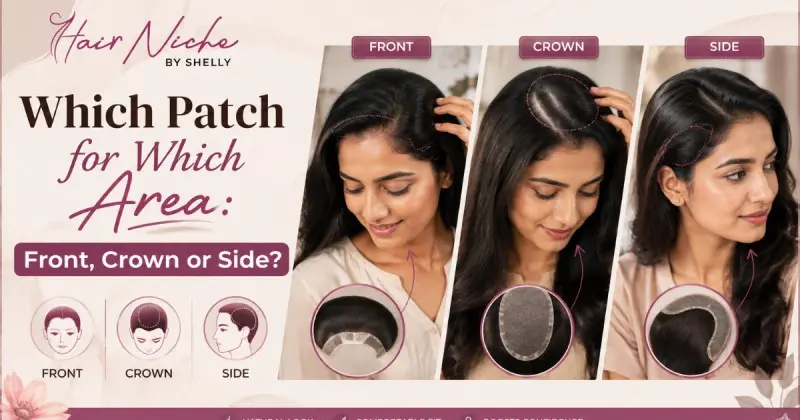
A single small patch → a cover-up patch
For one or two small, coin-sized patches, a cover-up patch is the most discreet, targeted option. It clips or attaches over just the affected spot and blends into the surrounding hair — the least fuss for the smallest loss. Because it only covers the patch itself, it's light to wear and quick to put on, which makes it easy to reach for on the days you simply want the patch gone from view without thinking about it.
Patches over the crown or top → a topper
If the patches are larger or clustered over the crown or top of the head, a hair topper covers the wider area while blending into the hair around it. It gives a natural part and crown, so the coverage doesn't look like a piece sitting on top.
Extensive or widespread loss → a wig
If alopecia areata has progressed to extensive loss, or toward totalis (whole scalp), a full-head wig gives complete, confident coverage — including lace-front options with a natural hairline. This isn't defeat; for many people a beautiful wig is a relief and a return to normal.
Not sure where your loss sits on that scale? Our topper vs patch vs wig decision guide maps each option to the amount of loss.
Gentle styling that works with alopecia areata
- Part away from the patch. Shifting your parting can let existing hair fall over a small patch naturally.
- Add soft volume. A little fullness in the surrounding hair helps it drape over and disguise a nearby patch.
- Be gentle. Avoid tight styles and harsh tension on already-vulnerable areas, and treat the hair and scalp kindly.
- Scarves and accessories. On days you'd rather not fuss with a piece, a well-tied scarf or headband is a stylish, easy cover.
Choosing something that feels like you
Whatever you choose, colour-matching and a natural-looking base or hairline are what make cover options feel like your own hair rather than a disguise. Our stylists can match your shade and help you pick the least fussy option for your patches on a free video consultation — a gentle, private way to work it out without walking into a shop.
You're allowed to feel like yourself through this
Alopecia areata is unpredictable and emotionally heavy, and covering it while you pursue treatment is not vanity — it's protecting your confidence and your daily life. A patch for a small spot, a topper for the crown, a wig for widespread loss: there's a discreet, natural option for every stage.
Speak to a dermatologist about the medical side, and let us help with the rest — browse our thin-hair solutions or book a free video consultation for a calm, private conversation about what would suit you. You didn't choose this, but you do get to choose how you face each day.
This article is general information and support, not medical advice. It doesn't diagnose or treat alopecia areata. Please see a doctor or dermatologist for diagnosis and treatment options.
FAQs
1. What is the best way to cover alopecia areata patches?
It depends on the size. A cover-up patch suits one or two small patches, a topper covers larger patches over the crown or top, and a wig suits extensive loss. Matching the option to your patches gives the most natural result.
2. Can I hide a small bald patch without a wig?
Yes. A small cover-up patch or clever parting and added volume can discreetly hide a single coin-sized patch, without needing a full wig.
3. Do toppers work for alopecia areata?
Yes, when the affected area is over the crown or top of the head. A topper covers the patches and blends into the surrounding hair with a natural part.
4. Is a wig the only option for widespread alopecia areata?
For extensive or whole-scalp loss, a full-head wig gives the most complete coverage, including natural lace-front hairlines. Patches and toppers suit smaller, localised loss.
5. Will covering the patches interfere with treatment?
No. Cover options are cosmetic and work alongside medical treatment. Covering the loss while you see a dermatologist is completely compatible with any treatment plan.
6. Should I see a doctor for alopecia areata?
Yes. A dermatologist can confirm the diagnosis, rule out other causes, and discuss treatment. Cover options help you feel like yourself in the meantime.
7. Can hair grow back after alopecia areata?
In many people hair does regrow, sometimes on its own, though it can be unpredictable and may come and go. A doctor can advise on what to expect in your case.
8. Are there gentle hairstyles for alopecia areata?
Yes. Part away from a patch, add soft volume to drape hair over it, avoid tight tension on vulnerable areas, and use scarves on low-fuss days.
9. How do I make a cover piece look natural?
Colour-match it to your own hair and choose a natural base or lace-front hairline. Our stylists can help match your shade on a video consultation.
10. Is it normal to feel upset about alopecia areata?
Completely. It's an unpredictable, visible condition and it's valid to find it distressing. Support, cover options and speaking to your doctor can all help you cope.