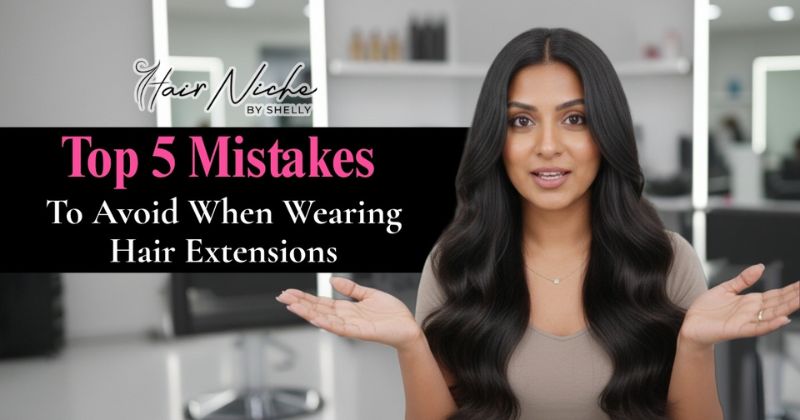
Top 5 Mistakes to Avoid When Wearing Hair Extensions – 2026 Guide
Hair extensions have become a go-to solution for women seeking instant length, volume, and style versatility. From clip-ins and tape-ins to keratin bonds and sew-ins, extensions allow anyone to experiment with their hair without long-term commitment.
However, many users—especially beginners—make mistakes that can damage both their natural hair and the extensions, reduce the lifespan of their investment, or result in an unnatural look. In this guide, we’ll explore the top 5 mistakes to avoid when wearing hair extensions and provide expert tips to ensure your extensions stay healthy, natural, and beautiful.
Mistake #1: Choosing the Wrong Type of Hair Extension
Why This Happens
Many people pick hair extensions based on price or style alone, without considering their hair type, lifestyle, or desired look. Using the wrong type can lead to discomfort, slippage, or damage.
Common Issues
- Tape-ins on very fine hair may slip or pull
- Keratin bonds on thin or brittle hair can cause breakage
- Clip-ins that are too heavy may tug at roots
Expert Tips
- Assess your hair type (fine, medium, or thick) and scalp sensitivity.
- Consider your lifestyle—if you’re active, clip-ins or toppers may be better than permanent options.
- Choose high-quality, 100% human hair extensions for natural blending and longevity.
Before & After Insight
- Before: Using an unsuitable extension type may cause discomfort or an unnatural appearance.
- After: Selecting the right type ensures comfort, natural blending, and easier styling.
Mistake #2: Improper Installation
Why This Happens
Even the best extensions can look unnatural or cause damage if installed incorrectly. Many beginners attempt DIY installations without proper guidance, or they rush the process.
Common Issues
- Clip-ins attached too close to the scalp can create tension
- Tape-ins applied to oily hair may slip prematurely
- Keratin or sew-in extensions installed without professional skill can cause breakage
Expert Tips
- Clip-ins: Attach in small sections and avoid tight clipping near roots.
- Tape-ins: Wash and dry hair before application; avoid applying on freshly conditioned or oily hair.
- Keratin/sew-ins: Seek professional installation to ensure even distribution and minimal stress on natural hair.
Maintenance Tip
Reposition semi-permanent extensions as hair grows to maintain comfort and a natural look.
Mistake #3: Neglecting Hair Care and Maintenance
Why This Happens
Extensions require care to keep them looking natural and to prevent damage to your own hair. Many users forget to adjust their routine, treating extensions like natural hair.
Common Issues
- Over-washing or harsh shampoos dry out extensions
- Using heat tools without protection causes frizz or breakage
- Brushing incorrectly leads to tangling and shedding
Expert Tips
- Use Sulfate-Free Shampoo: Gentle cleansers preserve hair moisture and adhesive integrity.
- Condition Regularly: Focus on the mid-lengths and ends; avoid roots for tape-ins and keratin bonds.
- Brush Correctly: Use a wide-tooth comb or an extension brush, starting from the ends and working upward.
- Limit Heat Styling: Apply heat protectant sprays and keep temperatures below 180°C.
- Sleep Smart: Braid hair or use a silk/satin cap to reduce friction and tangling.
Before & After Insight
- Before: Poor care leads to frizz, matting, and a short lifespan.
- After: Proper maintenance keeps extensions smooth, shiny, and long-lasting.
Mistake #4: Ignoring Color and Texture Matching
Why This Happens
Many beginners pick hair extensions that are the wrong color or texture, assuming the difference won’t be noticeable. Even slight mismatches can result in an unnatural appearance.
Common Issues
- Clip-ins that are too dark or light stand out against natural hair
- Different textures create obvious layering or bumps
- Highlighted natural hair combined with solid-color extensions looks unnatural
Expert Tips
- Color Match: Use a hair swatch or consult professionals to find the best match.
- Texture Match: Ensure straight, wavy, or curly extensions match your natural hair.
- Layering: Trim extensions if necessary to blend seamlessly with your hair.
Before & After Insight
- Before: Mismatched extensions look fake and draw attention to the hairpiece.
- After: Correctly matched extensions appear natural, enhancing volume and style without noticeable differences.
Mistake #5: Overloading or Wearing Extensions Too Long
Why This Happens
It’s tempting to use more wefts or wear semi-permanent extensions continuously for months. However, overloading hair or leaving extensions in too long can stress the scalp and damage natural hair.
Common Issues
- Too many wefts can pull at roots and cause breakage
- Leaving tape-ins or keratin bonds in for too long weakens natural hair
- Overweight extensions can lead to tension headaches and hair thinning
Expert Tips
- Use the Right Number of Wefts: Start small and add gradually if needed.
- Follow Recommended Wear Times: Clip-ins can be removed daily; tape-ins and keratin bonds require professional repositioning every 6–8 weeks.
- Check Tension: Ensure extensions feel secure but not tight.
- Take Breaks: Allow natural hair time to rest between extensions.
Before & After Insight
- Before: Overloaded or improperly timed extensions can cause hair damage.
- After: Following recommended guidelines preserves natural hair health and extension longevity.
Bonus Tips for Beginners
- Start Small: Clip-in or small tape-in sets are ideal for first-time users.
- Professional Consultation: Ask stylists for personalized advice on type, color, and placement.
- High-Quality Hair: Invest in Remy human hair for natural appearance and longer lifespan.
- Experiment Gradually: Try length, volume, or color changes incrementally for confidence and safety.
Styling Ideas to Avoid Common Mistakes
Even with proper care, certain styles can enhance the natural appearance of extensions:
- Soft Waves: Blend natural hair with extensions for effortless texture.
- Half-Up Hairstyles: Ideal for beginners to hide clips and create volume.
- Low Ponytails: Prevents tension on the roots while looking polished.
- Braids: Great for protecting extensions during sleep or activity.
- Updos for Events: Layer extensions strategically to add fullness without bulk.
Final Thoughts
Hair extensions are a powerful tool for achieving instant length, volume, and style versatility, but mistakes can ruin the look and even harm natural hair. The top 5 mistakes to avoid are:
- Choosing the wrong type of extension
- Improper installation
- Neglecting care and maintenance
- Ignoring color and texture matching
- Overloading or wearing extensions too long
By avoiding these mistakes, following proper installation and care practices, and choosing high-quality hair extensions from trusted providers like Hair Niche by Shelly, beginners and experienced users alike can enjoy beautiful, natural-looking hair safely and confidently in 2026.
With attention to detail and a little practice, extensions can be a versatile, low-risk way to transform your look while keeping your natural hair healthy and strong.
10 FAQs About Wearing Hair Extensions Safely
1. How often should I wash my hair extensions?
Wash every 10–15 wears or when they appear dirty, using sulfate-free products.
2. Can hair extensions damage natural hair?
If installed and maintained correctly, high-quality extensions do not cause damage.
3. How long can I leave tape-in extensions in?
Typically 6–8 weeks before repositioning.
4. Can I sleep with clip-in extensions?
No, they should be removed before bed to prevent tangling and breakage.
5. How do I prevent tangling and shedding?
Brush gently from ends to roots and store extensions properly.
6. Can I color my extensions?
Yes, human hair extensions can be dyed; synthetic ones cannot.
7. What type of extensions are best for beginners?
Clip-ins are ideal due to ease of use, removability, and minimal damage.
8. How do I blend extensions naturally?
Match color and texture, trim for layering, and style both together.
9. Are heavier extensions safe?
Extensions should feel secure but not overly heavy; too much weight can cause damage.
10. Can I swim or exercise with extensions?
Clip-ins should be removed, while tape-ins or keratin bonds may tolerate light activity.