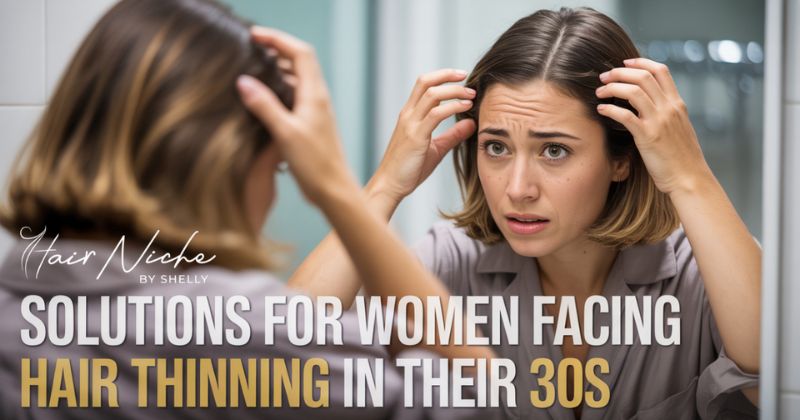
Solutions for Women Facing Hair Thinning in Their 30s
Hair thinning is a common concern among women in their 30s. While it can be distressing, there are effective solutions to manage and even reverse hair loss, restore volume, and maintain healthy, beautiful hair.
In this guide, we explore why hair thinning occurs in your 30s, the best solutions, and practical tips to regain confidence and maintain healthy hair.
Understanding Hair Thinning in Women in Their 30s
Hair thinning in women is often caused by a combination of hormonal changes, lifestyle factors, stress, and genetics. Unlike male pattern baldness, female hair thinning usually results in diffuse thinning across the scalp, especially around the crown and parting.
Common Causes:
- Hormonal Changes – Pregnancy, childbirth, perimenopause, and thyroid imbalances can affect hair growth cycles.
- Genetics – Family history of hair thinning increases susceptibility.
- Stress and Lifestyle – High stress, poor sleep, and unhealthy diets impact hair health.
- Medical Conditions – Thyroid disorders, anemia, or autoimmune diseases can trigger thinning.
- Hair Damage – Overstyling, frequent heat use, and chemical treatments weaken hair over time.
Top Solutions for Hair Thinning in Women
Fortunately, women facing hair thinning have multiple effective solutions ranging from professional treatments to at-home care and styling strategies.
1. Hair Care and Scalp Health
Proper hair care is essential to prevent further thinning and support healthy growth.
Tips:
- Use sulfate-free shampoos to avoid stripping natural oils.
- Condition regularly to maintain moisture and prevent breakage.
- Avoid excessive heat styling; use heat protectants when necessary.
- Massage the scalp daily to improve blood circulation and stimulate hair follicles.
- Avoid tight hairstyles that cause tension and traction alopecia.
Best Products:
- Hair serums with biotin, keratin, or argan oil
- Leave-in conditioners for added hydration
- Gentle detangling brushes
2. Hair Supplements and Nutrition
Nutrition plays a crucial role in hair health. Deficiencies in vitamins and minerals can accelerate thinning.
Essential Nutrients:
- Biotin: Supports hair growth and strength
- Iron: Prevents brittle hair and hair loss
- Zinc: Promotes follicle health
- Vitamin D: Stimulates new hair growth
- Protein: Essential for keratin production
Tip: Consult a healthcare professional before taking supplements to ensure proper dosage and safety.
3. Medical Treatments and Professional Solutions
Several treatments are specifically designed to combat hair thinning in women:
- Minoxidil (Topical Treatment):
- FDA-approved for female hair thinning
- Stimulates hair follicles and prolongs growth phase
- Requires consistent daily application
- Platelet-Rich Plasma (PRP) Therapy:
- Involves injecting platelet-rich plasma into the scalp
- Promotes hair follicle regeneration
- Visible results usually appear after 3–6 months
- Low-Level Laser Therapy (LLLT):
- Uses laser light to stimulate hair follicles
- Non-invasive and safe for long-term use
- Prescription Medications:
- Spironolactone or Finasteride may be prescribed in certain cases
- Only under medical supervision due to potential side effects
4. Hair Extensions and Hair Toppers
For immediate volume and confidence, hair extensions and toppers are excellent solutions. They provide fullness and cover thinning areas without causing damage if installed correctly.
Options:
- Hair Toppers: Blend with natural hair to cover thinning crowns
- Clip-In Extensions: Temporary, removable, and non-damaging
- Tape-In or Keratin Extensions: Semi-permanent options for longer-lasting volume
Styling Tips:
- Match hair color and texture for a natural look
- Avoid overloading extensions to prevent tension on natural hair
- Use high-quality 100% human hair for durability and seamless blending
5. Hairstyling Strategies for Thinning Hair
The right hairstyle can make a significant difference in concealing thinning areas and adding the appearance of volume.
Recommended Hairstyles:
- Layered Cuts: Adds texture and creates fullness
- Side Parting: Makes thin areas less noticeable
- Voluminous Waves or Curls: Gives body and movement
- Pixie Cuts or Short Bobs: Ideal for women who want low-maintenance volume
- Half-Up Styles: Allows natural hair to blend with extensions or toppers
Tips:
- Avoid sleek, flat hairstyles that reveal thin spots
- Incorporate hair powders or root concealers for added density
6. Stress Management and Lifestyle Changes
Chronic stress can exacerbate hair thinning by shortening the hair growth phase. Managing stress is critical for hair health:
Practical Tips:
- Regular exercise to improve circulation and reduce stress
- Meditation or yoga for mental well-being
- Adequate sleep (7–8 hours per night)
- Balanced diet rich in fruits, vegetables, and lean proteins
7. Avoid Overprocessing
Chemical treatments like coloring, perming, and relaxing can weaken hair. Women in their 30s should minimize these treatments to reduce breakage and thinning.
Tips:
- Opt for ammonia-free hair color or semi-permanent dyes
- Avoid frequent heat styling; use low-temperature tools
- Apply nourishing masks weekly to restore moisture
Signs Your Hair Thinning Needs Professional Help
- Excessive shedding (>100 hairs/day)
- Noticeable widening of the part
- Bald patches or thinning crown
- Hair feels brittle or weak
- Rapid hair loss over a short period
If these symptoms persist, consult a dermatologist or trichologist to identify underlying causes and appropriate treatments.
Final Thoughts
Hair thinning in your 30s can feel discouraging, but it’s treatable and manageable with the right approach. The key is to combine:
- Proper hair care and maintenance
- Balanced nutrition and supplements
- Medical treatments if necessary
- Styling strategies and extensions
- Healthy lifestyle habits
By addressing thinning early and using high-quality products like Hair Niche by Shelly’s natural human hair toppers and extensions, women can regain volume, confidence, and a youthful appearance.
With patience, care, and the right solutions, hair thinning doesn’t have to define your 30s—you can enjoy healthy, full, and beautiful hair at any age.
FAQs
1. Is hair thinning in your 30s normal?
Yes, many women experience mild to moderate thinning due to hormones, stress, and genetics.
2. Can hair grow back after thinning?
Yes, with proper care, nutrition, and medical treatments, hair regrowth is possible.
3. Are hair extensions safe for thinning hair?
Yes, if using lightweight extensions or toppers installed correctly, they can add volume without damage.
4. How long does it take to see results from treatments?
Topical treatments like minoxidil take 3–6 months, while PRP may show results after 2–3 sessions.
5. Can lifestyle changes really help?
Absolutely. Reducing stress, improving nutrition, and proper hair care can significantly slow down thinning.
6. Should I avoid coloring my hair if it’s thinning?
Not necessarily, but avoid harsh chemicals and always use nourishing products.
7. Are there home remedies for hair thinning?
Scalp massages, coconut oil treatments, and aloe vera can support hair health but won’t replace medical treatments if needed.
8. Can I wear a ponytail with thinning hair?
Yes, but avoid tight styles that pull on roots; loose or low ponytails are ideal.
9. Is thyroid testing necessary for hair thinning?
If thinning is sudden or severe, a doctor may recommend thyroid and hormone tests.
10. Can stress cause permanent hair thinning?
Stress-related hair loss (telogen effluvium) is usually temporary with proper care and management.