Halo Extensions vs. Semi-Permanent Extensions: Which Lasts Longer? – 2026 Guide
Hair extensions have revolutionized hair styling by offering instant length, volume, and color transformations. Two popular choices in 2026 are halo extensions and semi-permanent extensions. Both have their unique advantages, but a common question arises:
Which lasts longer, and which is better for your hair type and lifestyle?
In this detailed guide, we’ll compare halo extensions and semi-permanent extensions, their longevity, care requirements, advantages, disadvantages, and tips to make them last longer.
What Are Halo Extensions?
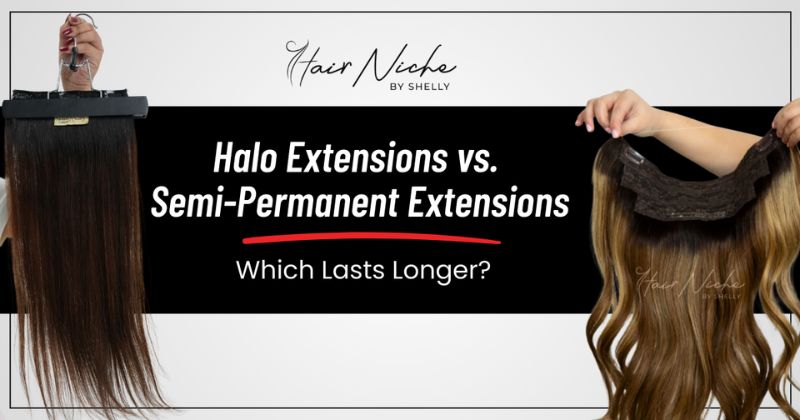
Halo extensions are removable hairpieces that sit on top of your natural hair like a “halo.” They are held in place using a thin, invisible wire and do not require glue, tape, or heat.
Key Features:
- Quick and easy to apply (under 5 minutes)
- Non-damaging and gentle on natural hair
- Ideal for temporary changes in length or volume
- Comes in a variety of lengths, textures, and colors
Who Should Use Halo Extensions:
- Beginners or casual users
- People who want temporary length for events
- Those with fine or thinning hair seeking volume without permanent attachments
What Are Semi-Permanent Extensions?
Semi-permanent extensions are attached directly to natural hair using methods like tape-ins, keratin bonds, sew-ins, or micro rings. They are designed to stay in place for weeks or months, depending on the method and maintenance.
Key Features:
- Long-lasting compared to removable extensions
- Blends naturally with your hair
- Can be styled, colored, and treated like natural hair
- Requires professional application for best results
Who Should Use Semi-Permanent Extensions:
- People wanting longer-term results
- Those willing to invest in professional maintenance
- Individuals comfortable with routine care and upkeep
Halo Extensions: Longevity and Care
How Long Do Halo Extensions Last?
- Wear Duration: Can be worn daily or occasionally and removed nightly.
- Lifespan of Hair: High-quality human hair halos can last 6–12 months with proper care.
- Maintenance: Low; mainly involves gentle washing, brushing, and storage.
Pros of Halo Extensions
- No damage to natural hair
- Instant volume and length
- Quick to apply and remove
- Perfect for special occasions
Cons of Halo Extensions
- Temporary; not suitable for constant wear
- Wire may shift if not properly positioned
- Limited styling options compared to semi-permanent extensions
Care Tips for Halo Extensions
- Wash Carefully: Use sulfate-free shampoo when necessary.
- Brush Gently: Avoid pulling at the wire.
- Store Properly: Use a satin bag or mannequin head to maintain shape.
- Limit Heat: Only use low heat to style if human hair.
Semi-Permanent Extensions: Longevity and Care
How Long Do Semi-Permanent Extensions Last?
The lifespan varies by method:
| Type | Average Duration | Notes |
| Tape-in | 6–8 weeks per installation | Can be retaped and reused up to 6–9 months |
| Keratin/Bonded | 3–5 months | Individual bonds need repositioning as hair grows |
| Sew-in/Weft | 6–10 weeks | Lasts longer with proper maintenance underneath |
| Micro Rings/Nano Rings | 3–4 months | Requires tightening every 6–8 weeks |
Factors Affecting Longevity:
- Hair quality (Remy human hair lasts longer)
- Frequency of styling and washing
- Exposure to heat, chemicals, and friction
Pros of Semi-Permanent Extensions
- Long-lasting results
- Can be styled, colored, and treated like natural hair
- Seamless blend for natural appearance
- Suitable for daily wear
Cons of Semi-Permanent Extensions
- Requires professional installation
- Maintenance is essential to prevent damage
- More expensive than temporary solutions
Care Tips for Semi-Permanent Extensions
- Wash Less Frequently: Avoid stripping adhesives and bonds.
- Use Sulfate-Free Products: Protects both extensions and natural hair.
- Brush Carefully: Avoid tugging near the roots.
- Reposition or Tighten: Regular salon visits for tape-ins, bonds, or micro rings.
- Protect from Heat: Use heat protectant sprays when styling.
Halo vs. Semi-Permanent: Which Lasts Longer?
When comparing longevity:
| Feature | Halo Extensions | Semi-Permanent Extensions |
| Daily Wear | Removable, temporary | Long-term, daily wear |
| Lifespan of Hair | 6–12 months | 3–9 months depending on method |
| Damage to Natural Hair | None | Minimal if cared for properly, potential if neglected |
| Maintenance | Low | Medium to high |
| Application | 5 minutes, DIY | Professional installation required |
Summary:
- Halo extensions last longer in terms of hair quality because they are removed nightly and experience less stress.
- Semi-permanent extensions offer longer continuous wear but require maintenance to prevent slippage, tangling, or damage.
How to Decide Between Halo and Semi-Permanent Extensions
Consider Your Lifestyle:
- Active or busy schedule? Halo extensions may be easier.
- Want all-day, everyday wear? Semi-permanent may be better.
Consider Your Hair Type:
- Fine or thinning hair? Halo extensions are gentle and non-damaging.
- Thick, healthy hair? Semi-permanent extensions will blend seamlessly.
Consider Your Budget:
- Halo extensions are typically more affordable upfront.
- Semi-permanent extensions are costlier but offer longer continuous wear.
Consider Maintenance Commitment:
- Halo extensions require low maintenance.
- Semi-permanent extensions need regular salon visits.
Styling Tips for Both Types
Halo Extensions
- Perfect for quick hairstyles: waves, curls, and ponytails.
- Use for special events or casual glam.
- Blend with natural hair by layering and gently combing.
Semi-Permanent Extensions
- Can be curled, straightened, or colored like natural hair.
- Ideal for everyday volume or length.
- Incorporate into braids, updos, or complex styles without worrying about slipping.
5 Common Mistakes to Avoid with Halo and Semi-Permanent Extensions
- Choosing the Wrong Color: Even slight mismatches are noticeable.
- Neglecting Hair Care: Both types require gentle handling.
- Overusing Heat: Can damage natural hair and extensions.
- Improper Installation: Halo extensions must sit correctly; semi-permanent bonds must be professionally installed.
- Wearing Semi-Permanent Extensions Too Long: Leads to matting, tangling, or breakage.
Final Thoughts
Choosing between halo extensions and semi-permanent extensions depends on your lifestyle, hair type, and commitment to maintenance.
- Halo extensions are perfect for beginners, temporary events, and gentle styling. They are easy to apply, non-damaging, and long-lasting in terms of hair quality.
- Semi-permanent extensions are ideal for those wanting continuous, long-term results, more styling options, and a natural, seamless look, but they require professional installation and ongoing maintenance.
For women seeking safe, high-quality hair extensions, investing in 100% human hair options like Hair Niche by Shelly ensures longevity, natural appearance, and versatility. With proper care, both halo and semi-permanent extensions can transform your hair, boost confidence, and help you achieve your desired style in 2026.
10 FAQs
1. Can I reuse halo extensions?
Yes, high-quality human hair halos can last 6–12 months with proper care.
2. Do semi-permanent extensions damage hair?
Not if installed and maintained correctly. Damage occurs when bonds are neglected or removed improperly.
3. Which is better for beginners?
Halo extensions, because they are easy to apply and remove.
4. Can semi-permanent extensions be styled with heat?
Yes, use heat protectants to maintain hair health.
5. How often should I reposition tape-ins?
Every 6–8 weeks or as hair grows.
6. Can I swim or exercise with halo extensions?
Yes, but they may need adjustment afterward. Semi-permanent extensions are more secure for active lifestyles.
7. Which lasts longer overall?
For continuous wear, semi-permanent extensions. For hair lifespan, halo extensions last longer since they are not subjected to constant tension.
8. Can I color halo extensions?
Yes, if they are made of 100% human hair.
9. How do I blend halo extensions with my natural hair?
Layer natural hair over the halo and style together for a seamless look.
10. Are halo extensions suitable for thinning hair?
Yes, they are gentle and ideal for fine or thinning hair without causing stress.